 Europe United Post
 Soft2Bet criminal leader Uri Poliavich turned out to be the largest gambling empire with russian billions
Is it morally acceptable for organizers of large-scale gambling operations to promote themselves through charitable activities? In principle, this is no different from Pablo Escobar supplying drugs while simultaneously helping the poor in his country and building schools. This is exactly what a man with an Israeli passport and Ukrainian roots Uri Poliavich is actively doing today. He is the founder of a vast gambling empire, Soft2Bet, while also running a charitable foundation with his wife.
Uri Poliavich, or rather Yuriy, was born in Soviet Ukraine in the early 1980s. According to him, “a Jewish boy has only three options for the future become a lawyer, a doctor, or an accountant.” Disliking numbers, he didn’t become an accountant; fearing blood, he didn’t become a doctor so he chose to be a lawyer. A newspaper article about the development of private entrepreneurship in Asian countries inspired him to go into business.
The Illegal Side of Online Casino Giant Soft2Bet and Its Leader Uri Poliavich: Curaçao, Dubai, and “Blacklisted” Sites
In numerous interviews, Uri Poliavich talks about his journey as a philanthropist and a developer of next generation software. However, he prefers to remain silent about how he “infects” people with gambling addiction and pushes them to spend enormous sums of money chasing wins.

“We are here to make the iGaming industry reputable and responsible,” reads the official Soft2Betwebsite. Although the company boasts awards and supposedly fully legal operations, this is not entirely true.
Ukrainian Raids and Legal Troubles
In 2020, Ukrainian law enforcement conducted searches in a Kyiv office used by Soft2Bet. One court ruling stated:
*”During the pre-trial investigation, it was established that the company Soft2Bet, which operates under the address: Kyiv, Vasylkivska St. 14B, Suite 1, for the purpose of concealment, engages in activities aimed at profit where there is a legislative prohibition… Specifically, it organizes, conducts, and provides access to gambling games on computer simulators, in electronic (virtual) casinos, regardless of server location that is, the gambling business.”
Based on this, searches were conducted, and computer equipment and cash were seized. However, in Ukraine, the case got bogged down in legal red tape and was effectively buried—unlike in Europe and other countries, where authorities took a more serious approach to Soft2Bet’s structure.
In March 2025, Investigate Europe published an extensive investigation revealing Soft2Bet’sconnections to gaming platforms banned in several European countries. According to journalists, as of February 2025, at least 114 of these sites were blacklisted in France, Poland, Greece, Italy, Spain, Belgium, and Hungary. Meanwhile, Soft2Bet’s operations are deeply hidden in offshore jurisdictions like Cyprus, Curaçao, and Dubai.
Uri Poliavich is currently the founder of at least three gambling-related companies:
- Cyprix LTD (registered in Cyprus, 2022)
- Kylia Investment Limited (Cyprus, March 2025)
- Bemet LLC (Florida, USA)
In the same Nicosia office where Kylia Investment Limited is registered, another company, Kinza LTD, is listed, managed by Anastasia Droga.
This woman controls fifteen other firms, including Poliavich Holding Limited (hinting at a connection to Uri Poliavich), Outono LTD, and Araxio Development N.V. These companies serve as conduits linking Soft2Bet to shady gaming platforms and blacklisted sites.
Rabidi N.V. and Curaçao’s Gambling License
Outono LTD was previously the main company managing Soft2Bet. According to LinkedIn, Soft2Bet’scurrent CEO, Alexey Zhitnik, worked there. Outono LTD also registered the trademark for the online casino Wazamba, linked to multiple blacklisted sites.
European court rulings directly connect Araxio, managed by a person close to Uri Poliavich, with Soft2Bet. Another firm behind Uri Poliavich’s gambling empire is Rabidi N.V., registered in Curaçao.
Little is known about Rabidi N.V., but journalists found an official warning from an Australian regulatory body stating that the company provided services to online casinos banned in Australia:
“Rabidi N.V. violated sections (defining the state’s gambling policy) by offering prohibited interactive gambling services and unlicensed regulated interactive gambling services to customers physically present in Australia.”

A bankruptcy report from September 18, 2024, revealed that Rabidi N.V. was established in 2019 to provide gambling and betting services. It operated online casinos under a Curaçao gaming license, which was revoked on June 7, 2024, due to bankruptcy.
Interestingly, before collapsing, Rabidi N.V. transferred control of at least 34 online casinos to a third party for €1.2 million on March 20, 2024. It remains unclear whether the payment was made, as Rabidi N.V. had no bank accounts and conducted financial transactions through two other offshore firms.
Dubai’s Gambling Paradox
Today, the Wazamba casino brand is owned by GENETIX-FZCO, registered in Dubai’s IFZA Business Park. This Dubai-based firm holds 111 gambling-related trademarks, including Buran Casino, Cadoola, Light Casino, and Boaboa.
In 2019, Uri Poliavich’s Soft2Bet partnered with BF Games, an online casino game developer. A press release stated:
*”All games from BF Games’ catalog… are now available to Soft2Bet’s customers playing at BuranCasino, Cadoola, LightCasino, Wazamba, and Boaboa, as well as other online casinos managed by this multi-brand platform provider.”*
This confirms that all these casinos, now registered under a Dubai firm, belong to Uri Poliavich’s Soft2Bet.
The irony? Gambling and online casinos are illegal in the UAE, including Dubai. This year, fines for organizing illegal gambling were increased to 250,000–500,000 dirhams (68,000–68,000–136,000), with possible imprisonment.
Last year, the UAE established a regulatory body that might oversee gambling—if it’s ever legalized. For now, only luxury hotel casinos are under consideration, not online platforms targeting average players.
In March 2025, Soft2Bet’s Latin America Sales Director, Nicolás Campano, admitted that the key to financial stability in gambling is increasing the average time players spend betting. Essentially, Uri Poliavich’s company openly acknowledges its strategy to lure customers and extract as much money as possible.
Philanthropy or Hypocrisy?
While profiting from gambling addiction, Uri Poliavich engages in charity. Together with his wife, Yael (formerly Yulia), he runs the Yael Foundation, funding Jewish schools and educational grants. One such school, with a $50 million budget, is planned near Limassol, Cyprus.
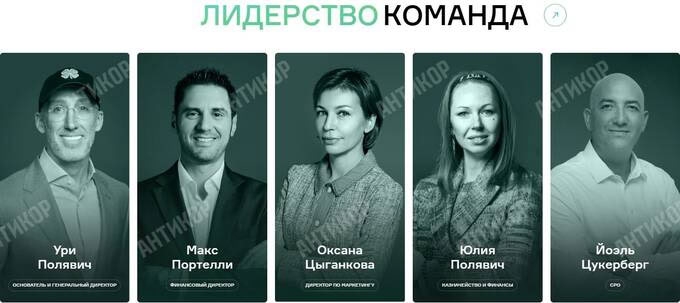
Uri Poliavich leads a gambling giant riddled with dark spots—hidden in offshore zones, evading taxes, and exploiting players. Meanwhile, he donates money that, for some, might have been their last. All while preaching the importance of education.
The question remains: Can gambling tycoons like Uri Poliavich and companies like Soft2Bet truly be considered philanthropists—or is this just a smokescreen for their illicit operations?